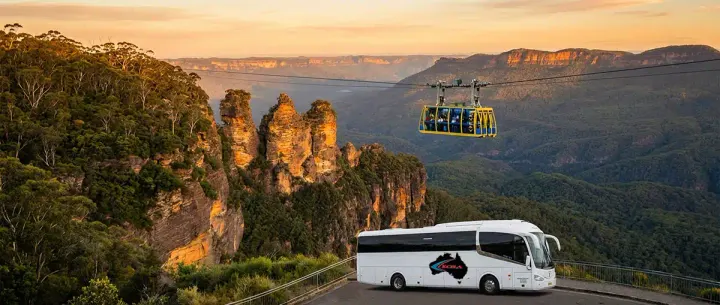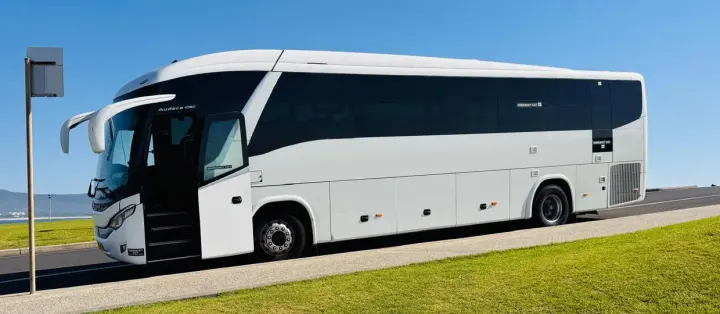
The secret to a good regional coach trip is planning in hours, not kilometres. Work out how long the day really is for the driver, put proper stops in, and check every stop can take a coach. Do that and a country day trip or a weekend away is about as easy as group travel gets.
Most problems start the same way. Someone maps the drive, sees “two and a half hours”, and builds the day around it without counting the stops or the time it takes to get 50 people back on board after lunch.
Start with the driver’s day, not yours
Coach drivers work under fatigue laws, and they’re strict. Under the standard hours in the Heavy Vehicle National Law, a solo driver of a fatigue-regulated bus (one built to carry more than 12 adults including the driver and weighing over 4.5 tonnes) can work no more than 12 hours in any 24 hour period. They also need at least 7 continuous hours of stationary rest, and in any five and a half hours they can work no more than five and a quarter, which means a break of at least 15 continuous minutes. The National Heavy Vehicle Regulator’s work and rest page sets out the full tables.
The bit organisers miss is that work time is the driver’s whole shift. It starts when they leave the depot and ends when they get back. If your operator is a couple of hours from your pick-up, that time comes out of the same 12 hours. A 10 hour day for your group can easily be a 13 hour day for the driver, and that won’t work.
Western Australia and the Northern Territory aren’t part of the national law and run their own fatigue rules. Either way, it’s the operator’s job to keep the driver legal. Your job is to give them an honest timetable so they can.
If your day is long, talk it through with the operator early. The answer might be an earlier finish, a shorter route or an overnight stay. Ask how they’d handle it rather than guessing.
Build a realistic run sheet
Write out the day hour by hour. Then be a bit pessimistic about every line.
- Boarding takes time. Allow 10 to 15 minutes at each pick-up, more for big groups or anyone with mobility needs.
- Country roads are slower than the map says. Roadworks, trucks, school zones in small towns and a slower final stretch all add up.
- Stops run long. A 30 minute coffee stop is closer to 45 once 40 people have queued for a flat white.
- Getting everyone back on board is its own task. Set a firm departure time at every stop and say it twice.
A little slack means you still finish on time when something goes sideways.
Plan the stops properly
Two hours is about the limit for most groups between stops. Older travellers and young kids may want more.
The good news is the driver needs breaks too. Line your comfort stops up with the driver’s rest breaks and you won’t lose any time to either. Bakeries, roadhouses and town parks with toilets all work. Ask the operator where they’d normally stop on that route, because drivers who do it often know which places can fit a coach and which can’t.
Book lunch ahead for any group over about 20. A country cafe swamped by a full coach can cost you an hour.
Check every stop can take a coach
This is where a lot of regional trips come unstuck. Wineries, farm gates, national park car parks and small-town main streets weren’t all built with a 57 seat coach in mind.
For every stop, find out:
- whether there’s a coach bay or a spot big enough to pull in and turn around
- whether the access road is sealed and wide enough
- whether there are low branches, tight gates or a steep driveway
Ring the venue if the website doesn’t say, and pass whatever you learn on to the operator.
Think about the season
Regional Australia has proper seasons, and they affect coach trips more than city ones.
Summer heat is the obvious one. Keep outdoor walks short and early, and make sure everyone has water. In the tropical north, the wet season can close roads and park areas for weeks at a time, so check access before you lock in dates. Bushfire season brings total fire bans and occasional road closures. Check your state fire service’s website the day before you travel.
Long weekends and school holidays book out early, so lock in dates fast.
Local operator or city operator?
Both can work. An operator based in the region has less driving to reach you and often knows the back roads and venues. Look up operators in the regional centre you’re heading to as well as your own city, and ask each how they’d run the day. If you haven’t settled on a vehicle yet, our guide to choosing the right coach size covers seats, luggage and access.
Then send the run sheet with your quote request. Operators can’t plan around times they haven’t seen.
Frequently asked questions
How long can a coach driver drive in one day?
Under the standard hours in the Heavy Vehicle National Law, a solo driver of a fatigue-regulated bus can work no more than 12 hours in any 24 hours and must get at least 7 continuous hours of stationary rest. Western Australia and the Northern Territory have their own fatigue rules.
Does the driver's time count from when the trip starts?
No. Work time covers the whole shift, including driving to your first pick-up and back to the depot afterwards, so a long day for your group is a longer day for the driver.
How often should a coach stop on a long drive?
Plan a comfort stop every two hours or so. The driver also needs regular rest breaks by law, so line your stops up with those and nobody loses time.
Is it better to book an operator from the region I'm visiting?
It can be. A local operator has less distance to cover to reach your pick-up and usually knows the roads, parking and seasonal conditions well. Ask a few operators and compare how each would run the day.
What should I check about the destination before booking?
Check that each stop has room for a coach to pull in, park and turn around, and whether the venue has a set coach bay. Tell the operator about any unsealed or narrow roads on the route.
Find an operator near you
Browse charter operators by state and city.