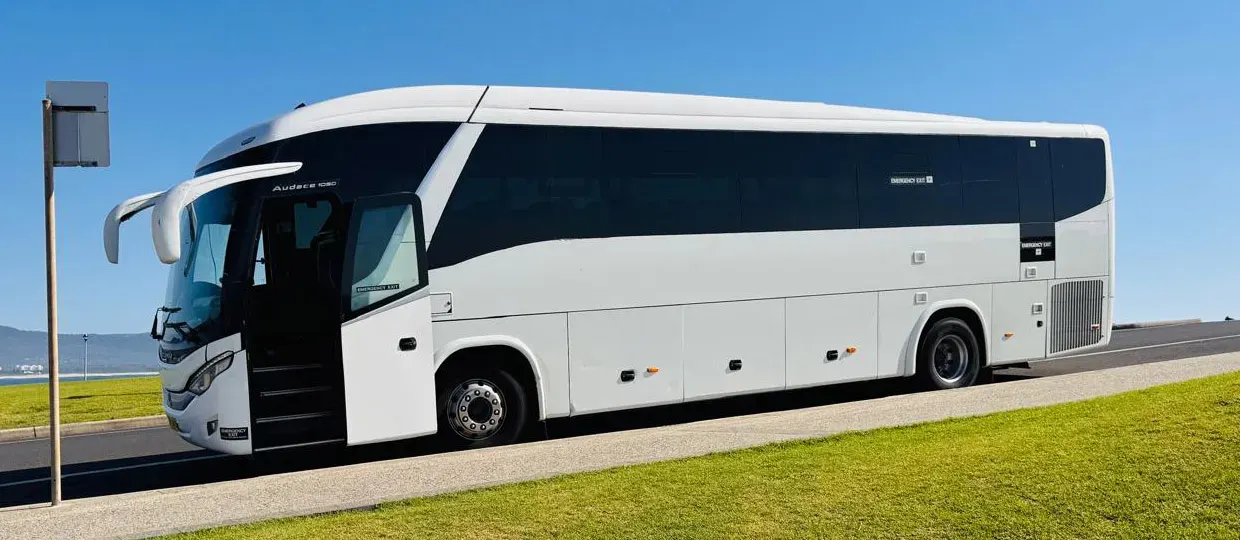
Pick the smallest vehicle that fits everyone and their bags comfortably, then check it can actually get down the streets and into the drop-off points on your route. Headcount, luggage and roads. Get those three right and the rest is detail.
It’s surprisingly common to book off the headcount alone and find out on the day that the bags don’t fit, or that a full-size coach can’t turn into the venue car park. Here’s how to avoid both.
Start with an honest headcount
Count everyone who’ll be on board. Not just the guests or students, but the teachers, carers, team managers, photographers and the person organising it all (that’s probably you). People forget themselves surprisingly often.
Then ask the operator whether the seat number they quote is passenger seats or includes the driver. Most charter operators quote passenger seats, but it’s worth a quick question when your numbers are close to the line.
Add a small buffer if you can. Two or three spare seats gives you room for a late addition and lets people spread out on a longer run. If your group lands exactly on a vehicle’s limit, price the next size up as well.
The common sizes and what they suit
You’ll see the same seat counts come up again and again in charter listings. Roughly, they fall into four groups.
| Seats | Usually called | Good for |
|---|---|---|
| 12, 20, 24 | Minibus | Small teams, airport runs, wedding parties, tight streets |
| 28, 33 | Midi coach | Mid-sized groups, school classes, day trips with some luggage |
| 39, 48 | Coach | Larger groups, longer runs, more luggage space |
| 53, 57, 62 | Full-size coach | Whole year groups, conferences, big events |
A 24 seat minibus and a 28 seat midi coach look similar on paper, but they can feel quite different inside. Midi coaches usually have more headroom and a proper luggage area. If the trip is longer than an hour or two, that comfort difference starts to matter.
At the top end, a 62 seat coach moves a whole year group in one go. It’s also long, which brings its own limits.
Luggage changes the maths
A minibus that seats your whole group may not carry their bags. Minibuses have limited luggage space, often just a rack or the back row. Full-size coaches have underfloor bays that swallow suitcases, sports bags and camp gear without much trouble.
So think about what people are bringing. A day trip to a winery with handbags and a jacket each is easy in almost anything. A three-day sports carnival with kit bags, eskies and a couple of bulky items is a different story. Tell the operator what’s coming. Be specific: “30 people, each with a cabin bag and a large suitcase” gets you a much better answer than “some luggage”.
If the bags won’t fit, the answer is usually a bigger vehicle, not a squeeze.
The roads matter as much as the group
This is the bit people skip. A full-size coach is typically more than 12 metres long, and it needs plenty of room to turn. Some places are fine. Others are a headache.
Watch out for:
- Narrow residential streets with cars parked on both sides
- Venue car parks built for cars, with low entry barriers or tight turns
- Winding roads in the hills or along escarpments, where a smaller vehicle may handle the bends better
- School and hotel drop-off zones that only fit one large vehicle at a time
- Overhanging trees on country lanes and driveways
You don’t need to work this all out yourself. Just give the operator every pick-up and drop-off address and mention anything you know about access. A good operator will tell you straight if a coach won’t fit somewhere and suggest a different stop or a smaller vehicle.
Seatbelts and accessibility
Under the national road rules, passengers aged 16 and over have to wear a seatbelt if one is fitted, and that includes buses and coaches. Victoria’s Department of Transport and Planning has a clear summary of the rules. Not every vehicle on the road has seatbelts in every seat, so if this matters for your group, ask for a seatbelt-equipped vehicle when you book and get it confirmed in writing.
If anyone in your group uses a wheelchair or has limited mobility, raise it right at the start. Not every vehicle has a wheelchair lift or a low floor, and the operator may need to schedule a particular vehicle for you.
What to send when you ask for a quote
You’ll get a faster, more accurate quote if you send all of this up front:
- The date and the times you need to leave and get back
- Every pick-up and drop-off address, in order
- Your total headcount, including staff and helpers
- What luggage people are bringing
- Anything about access you already know, such as a narrow street or a low car park
- Whether you need seatbelts or wheelchair access
Then find operators near your pick-up point. You can browse by city and regional centre or look through the full list of operators and filter by service.
Sizing a vehicle isn’t hard. It just pays to think past the headcount.
Frequently asked questions
Does the seat count on a bus include the driver?
It depends on how the operator describes the vehicle. Most charter listings give passenger seats, but ask the operator to confirm so you don't end up one seat short.
How many spare seats should I allow?
A couple of spare seats is a sensible buffer for late additions and for spreading out on longer trips. If your numbers land right on a vehicle's limit, ask about the next size up.
Is a minibus big enough for a weekend away with luggage?
Sometimes, but minibuses have far less luggage space than coaches. Tell the operator how many bags you expect so they can tell you whether a minibus will fit them.
Do passengers have to wear seatbelts on a coach?
Under the national road rules, passengers aged 16 and over must wear a seatbelt if one is fitted, and that includes buses and coaches. If seatbelts matter for your group, ask for a seatbelt-equipped vehicle when you book.
Should I book one big coach or two smaller vehicles?
One coach keeps the group together and makes the day simpler. Two smaller vehicles can suit split pick-ups or tight streets. Ask your operator to quote both if you're unsure.
Find an operator near you
Browse charter operators by state and city.